Most African countries are governed democratically by varying degrees of democratic norms; however, they all have one thing in common. The system did not work as expected. Democracy has not produced the dividends everyone hoped for during the struggles over the Western-influenced system in the early 1990s. Corruption appears to be getting worse, and economic development has not kept up with people’s expectations. Moreover, extreme poverty remains prevalent, and many countries on the continent suffer from precarious conditions.
This article analyses Africa’s current democracy using Nigeria as a case study and proposes an alternative democracy which strengthens the current democracy system through the infusion of Africa’s culture, values, and principles. Sub-Saharan Africa is experiencing a democratic decline, accelerated by the COVID-19 pandemic.
Today, more Africans live in fully or partially authoritarian states than in most of the last two decades. Even before the pandemic, more and more African leaders were circumventing term limits or rigging elections to stay in power, postponed elections in Somalia and Ethiopia, shot down opposition forces in Uganda and Tanzania, and provided another pretext to impose media restrictions across the continent. Implementation of pandemic restrictions by security agencies has often been brutal, sparking demonstrations even in more advanced democracies like Kenya and South Africa.
With few exceptions, as governments across the continent become more authoritarian, Africans become increasingly alienated from those who claim to represent them. Ethiopia, Mozambique, Nigeria. Political instability can manifest itself in violent outbursts, as already observed in Such turmoil will increase as elites vie for power and citizens resist oppressive regimes, thus hampering social and economic development and damaging the continent’s rapidly growing population. Collectively, these forces are also driving internal displacement and migration, both to other African countries and to Europe. Addressing these problems requires addressing long-standing grievances that are unaddressed and often exacerbated by poor and sometimes brutal governance that is all too common on the African continent.
Authoritarian and semi-authoritarian rulers are cognizant of foreign opinions and are subject to democratic policies such as regular (albeit rigged) elections and legal (but not de facto) separation of powers. Presidential term limits, when they existed, were often circumvented by so-called constitutional coups. Heads of state have manipulated social divisions and played on fears of malicious foreign intervention to divert popular pressure from their illiberal rule. African democracies today are filled with myriad influences, including the legacy of colonialism and the advent of the digital age.
Should foreign government systems be blamed for these problems, which are unable to create the conditions necessary for sustainable political stability and economic development in Africa? The inadequacy of the current system is that it is cut off from African history.
Nigeria: A Case Study
Since its independence, Nigeria’s democracy has been precarious and unstable. In a complicated nation with more than 200 ethnic groups within its borders, which were drawn by British colonialists, successive governments have struggled to forge a sense of national unity. The various regions of the nation have had varying rates of growth and democratisation.
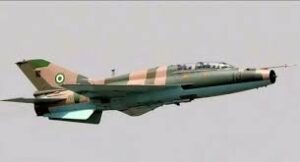
The connection between Nigeria’s military and democracy has a long and difficult history. Nigeria has been governed by the military rather than a civilian government for more than half of its time as an independent state. Three republics have been overthrown by military coups since achieving independence in 1960, and two of Nigeria’s four democratically elected presidents of the fourth republic have presided over those military dictatorships.
Since gaining independence in 1960, Nigeria has had four republics with both elected and military governments. The civil war and the concentration of power during the military rule significantly undermined Nigeria’s democracy. A strong, prosperous, and frequently corrupt military elite was bred because of the struggle, which also served to concentrate oil profits in the hands of army officials. Nigeria’s political landscape became militaristic under the dictatorships, which also hampered the development of democratic institutions and a democratic culture. Over the past ten years, Nigeria’s army, which was previously thought to be the most capable on the continent, has been significantly depleted. It has struggled to quell an uprising by the terrorist group Boko Haram in the north-east while failing to provide basic security in huge portions of the country.
Press freedom and citizenry rights are currently restricted, and anyone speaking out against the current administration will face retaliation. A good example is the ENDSARS protest, where the right to information was restricted and Twitter was temporarily blocked. Election turnout has been impacted by the persistent presence of violence in Nigerian elections. As an alternative to Western democratic systems, Africa needs a model of political government based on African traditions and culture. a system that equally integrates the ideals and tenets of Western democracy and traditional pre-colonial African political structures. African education is dominated by European ideas. Therefore, it is customary for the intellectual class to seek to the West for solutions to the challenges facing the continent. However, the task of creating alternative political systems that suit African policies has little to offer from the West.
Good Governance or Bad Leadership
What can Africa’s international allies do to boost democracy? Good governance is important, according to the United Nations, development organisations, international financial institutions, and many Africans. Many other African nations can benefit from what Nobel laureate Chinua Achebe said about Nigeria. In general, there is nothing wrong with personalities from Nigeria. Everything in Nigeria, including the land, climate, water, and air, is good.
Weak government organisations help and encourage bad leadership. Barack Obama, the president of the United States, stated in a speech to Congress during a 2009 visit to Ghana that “Africa does not need strong people, it needs strong institutions.”
However, creating a system requires persistence and time. It will take time for things like a free press, an equitable tax system, civic engagement, and civic education to emerge. However, strengthening institutional infrastructure is not a particularly effective strategy to advance democracy in Africa. Many resilient institutions provide the ruthless elite with the highest benefits, but during the colonial era, these institutions were purposefully destroyed by “big men” and their allied armies. In sub-Saharan Africa, which has been weakened by instability, it is a particular burden.
Such initiatives, supported by the activism of NGOs, media, and engaged citizens, eventually result in democracy. It serves as a stimulus for repairing. However, the US and other allies should and need to do their part to ensure that people who work to promote democracy and good governance may do so in a secure environment.
Africa still faces pressing security issues without having to wait for the emergence of a democratic society, and most African nations are distinctive due to their multi-ethnic and religious makeup. In the Balkans, where cultural variety is comparatively trivial compared to many African countries, you can observe how Europe fought for peace. To address the problems with democracy, we will have to take a step back and develop our own way of thinking. The best option for post-colonial Africa is an “intellectually and scientifically sound form of political control for indigenous Africans,” a brand-new kind of governance that includes the populace, an army, and conventional leaders.
References
https://www.cfr.org/article/whats-happening-democracy-africa