War on the Pitch
How the US–Israel–Iran Conflict Is Reshaping the 2026 World Cup
By Adeola Opeyemi O
Published: April 7, 2026
The Unthinkable Becomes Real
For decades, FIFA has clung to a simple, almost sacred doctrine: sport and politics do not mix. The World Cup, in particular, has been presented as a rare oasis a month-long ceasefire where flags represent passion, not power, and where rivalries are settled on grass, not battlefields.
The summer of 2026 is shattering that illusion.
With the United States co-hosting the tournament alongside Mexico and Canada, and with Washington actively engaged in military strikes against Iran alongside Israel, the World Cup finds itself in uncharted territory. Never before has a host nation been an active belligerent against a qualified participant. Never before have athletes been asked to decide whether traveling to a tournament constitutes an act of political endorsement or personal danger.
The assassination of Iran’s Supreme Leader in late February 2026 transformed a simmering shadow war into open conflict. And as that conflict has escalated, its tremors have reached the very heart of global football.
This is not a story about whether the World Cup will be canceled. It will almost certainly proceed. But it will be a tournament fundamentally altered in who competes, how safely they compete, who watches, and what the event ultimately comes to symbolize.
The Participation Crisis: Will Iran Play?
The most immediate and tangible effect of the war is the precarious status of Iran’s national team.
On March 26, 2026, Iran’s Ministry of Sport issued a binding directive that sent shockwaves through the football world: no Iranian national team or club was permitted to travel to countries designated as “hostile” where safety could not be guaranteed. Given that the United States is actively bombing Iranian military positions and has killed the country’s head of state, the designation was unmistakable.
Iran’s Football Federation formally requested that FIFA relocate its three Group G matches scheduled against Belgium, Egypt, and New Zealand from SoFi Stadium in Los Angeles and Lumen Field in Seattle to neutral territory, specifically Mexico. FIFA’s response was swift and firm: the schedule is fixed. Matches will not be moved.
This has created an extraordinary standoff.
If Iran adheres to its own state ban, the team will forfeit its matches. FIFA’s contingency planning, according to internal sources, has considered two alternatives: replacing Iran with another Asian qualifier (likely Iraq or the United Arab Emirates) on impossibly short notice, or reducing Group G to three teams a solution that would fundamentally undermine the competitive integrity of the new 48-team format.
Behind the scenes, however, an even more basic problem exists. Even if the political ban were lifted, Iran’s delegation cannot easily enter the United States. Mehdi Taj, the president of Iran’s football federation, has previously been denied US visas for routine sporting events. With active hostilities under way, consular processing for Iranian nationals has effectively ceased. The team has been training in Turkey—neutral ground—precisely because returning to Iran or attempting to enter the US carries unacceptable risks.
For the players themselves, morale is shattered. Following the defection of five members of the women’s national team in Australia earlier this year, the men’s squad is reportedly fractured. Star forward Sardar Azmun, long an outspoken critic of the Iranian regime, has been expelled from the team for political statements related to the war. Those who remain describe a squad caught between loyalty to country, fear for family members back home, and the surreal prospect of playing a tournament in a nation their own government considers an enemy.
Security’s Double Front
Even if Iran resolves its participation crisis either by attending under protest or being replaced the security environment for the 2026 World Cup is unlike any in the tournament’s history.
The United States government has issued the standard assurances that it can host a safe event. The Department of Homeland Security has activated its highest-level sports-event coordination protocols. But security experts point to an uncomfortable reality: the threat matrix is now bidirectional.
On one side, there is the risk of state-directed or state-inspired retaliation against US targets during a globally televised event. Iranian leaders have publicly warned that American “soft targets” remain vulnerable. While specific credible threats against World Cup venues have not been confirmed by intelligence agencies, the risk calculus has shifted dramatically from “general terrorism concern” to “active wartime footing.”
On the other side, there is the risk to Iranian players themselves. Multiple Iranian athletes have received threatening communications both from hardliners accusing them of betraying the revolution by even considering participation, and from hostile actors warning them against setting foot on American soil. Security protocols for the Iranian delegation, if they ultimately travel, will resemble those of a head of state rather than a sports team.
But the United States is not the only host nation facing a security crisis.
Mexico, scheduled to host the tournament’s opening match, is experiencing a parallel and entirely separate surge of cartel violence. Following the killing of a major drug lord in February 2026, rival factions have engaged in open warfare in Guadalajara and surrounding areas, with torched vehicles and highway blockades becoming commonplace. The Mexican government has announced plans to deploy 100,000 security forces for the tournament, but the juxtaposition is jarring: the United States deploys warplanes over the Middle East while Mexico deploys soldiers against cartels on its own streets.
For the first time in World Cup history, two co-hosts face active threat designations one from foreign state actors, one from internal narco-terrorism. The visual narrative of “Fortress North America” may reassure security planners, but it stands in stark tension with FIFA’s traditional messaging of sport as a force for peace and openness.
The Boycott Question
Perhaps the most unpredictable variable is not whether Iran will attend, but whether other nations will stay away.
The war has opened a political space that did not exist six months ago. Criticism of the United States as host is no longer confined to anti-American activists; it has entered mainstream political and sporting discourse in Europe.
The catalyst was a series of statements from German football officials. Oke Göttlich, a vice president of the German Football Association (DFB), publicly called for a discussion on boycotting the tournament, citing not only the war in Iran but also broader US policies under the Trump administration, including threats regarding Greenland and aggressive immigration enforcement. While the DFB has since walked back any suggestion of an official boycott, the fact that the conversation occurred at all is remarkable.
In the Netherlands, a citizen petition urging the national team to withdraw has gathered 165,000 signatures. In France, while the federation has remained publicly committed to participation, internal debates have been reported. Even in the United Kingdom Washington’s closest ally parliamentary questions have been raised about the appropriateness of sending athletes to a country engaged in active military strikes against a nation that is also, technically, a FIFA member.
No European team has formally withdrawn. But the trend line is clear. Public sentiment in key European markets is shifting, and sponsors are taking notice. Advertising agencies report that clients are inserting “force majeure” clauses into World Cup media buys an unprecedented level of caution for a tournament less than three months from kickoff.
Brand strategy has already pivoted. Instead of high-budget, patriotic US-centric campaigns, advertisers are shifting toward “resilience” and “humanity” messaging. Digital spend is being reallocated from US venue branding to global markets in Europe and Asia, hedging against the possibility that the tournament becomes a political lightning rod or, in a worst-case scenario, collapses under boycotts or security withdrawals.
The Diplomatic No-Man’s-Land
Caught in the middle is FIFA itself, and its president, Gianni Infantino.
Infantino has long prided himself on keeping football above the geopolitical fray. But the current crisis offers no clean escape. When Infantino publicly thanked President Trump for “allowing” Iran to participate a remark seemingly intended as diplomatic courtesy it backfired spectacularly. Iranian officials seized on the statement as proof that the United States, not FIFA, controls access to the tournament. If Washington can grant or revoke permission for a sovereign nation’s team, what remains of FIFA’s authority?
Iran has rejected Infantino’s subsequent mediation efforts, viewing his close working relationship with the Trump administration as evidence of bias. FIFA’s legal department is scrambling to determine whether forcing Iran to play in a country actively bombing its homeland would violate international safety laws or even basic human rights conventions.
The precedent being set is dangerous regardless of outcome. If FIFA excludes Iran, the organization surrenders its claim to political neutrality forever. If FIFA forces Iran to play and an incident occurs, the liability moral and potentially legal is incalculable. And if Iran withdraws voluntarily under state pressure, the tournament proceeds with a gaping hole in its claim to global representation.
Broadcast, Logistics, and the Contingency Economy
Beyond the headlines of participation and security, the war is reshaping the World Cup in quieter but equally significant ways: in the boardrooms of broadcasters and the logistics hubs of international travel.
The closure of Iraqi airspace until at least early April imposed following the escalation of hostilities has already disrupted regional football, forcing the postponement of Asian Champions League matches. That same airspace closure sets a troubling precedent. If the conflict widens, flight paths for Asian and European teams traveling to the US West Coast, which often route over the Arctic or via the Middle East, could be affected. Travel delays, security reroutes, and even the inability to secure overflight permissions are no longer theoretical concerns.
Broadcast rights present another layer of complexity. Iran represents a significant viewing audience in the Middle East. If the Iranian team withdraws or is excluded, broadcasters who paid for those rights will seek compensation. FIFA’s legal exposure could run into hundreds of millions of dollars. Post-tournament litigation is already being forecast by sports lawyers as inevitable.
Meanwhile, the logistical challenge of the 48-team format already the most complex in World Cup history has become exponentially more difficult. Teams require advance training facilities, accommodation, transport, and security coordination. Every day that Iran’s status remains unresolved pushes contingency plans closer to the point of no return.
What the World Cup Becomes
So what will the 2026 World Cup ultimately look like?
It will almost certainly take place. The sunk costs financial, organizational, reputational are too vast for cancellation to be a realistic option. FIFA, the host nations, and the sponsors will push forward, adjusting as circumstances demand.
But it will not be the tournament that was planned. It will not be the unifying global celebration that FIFA markets.
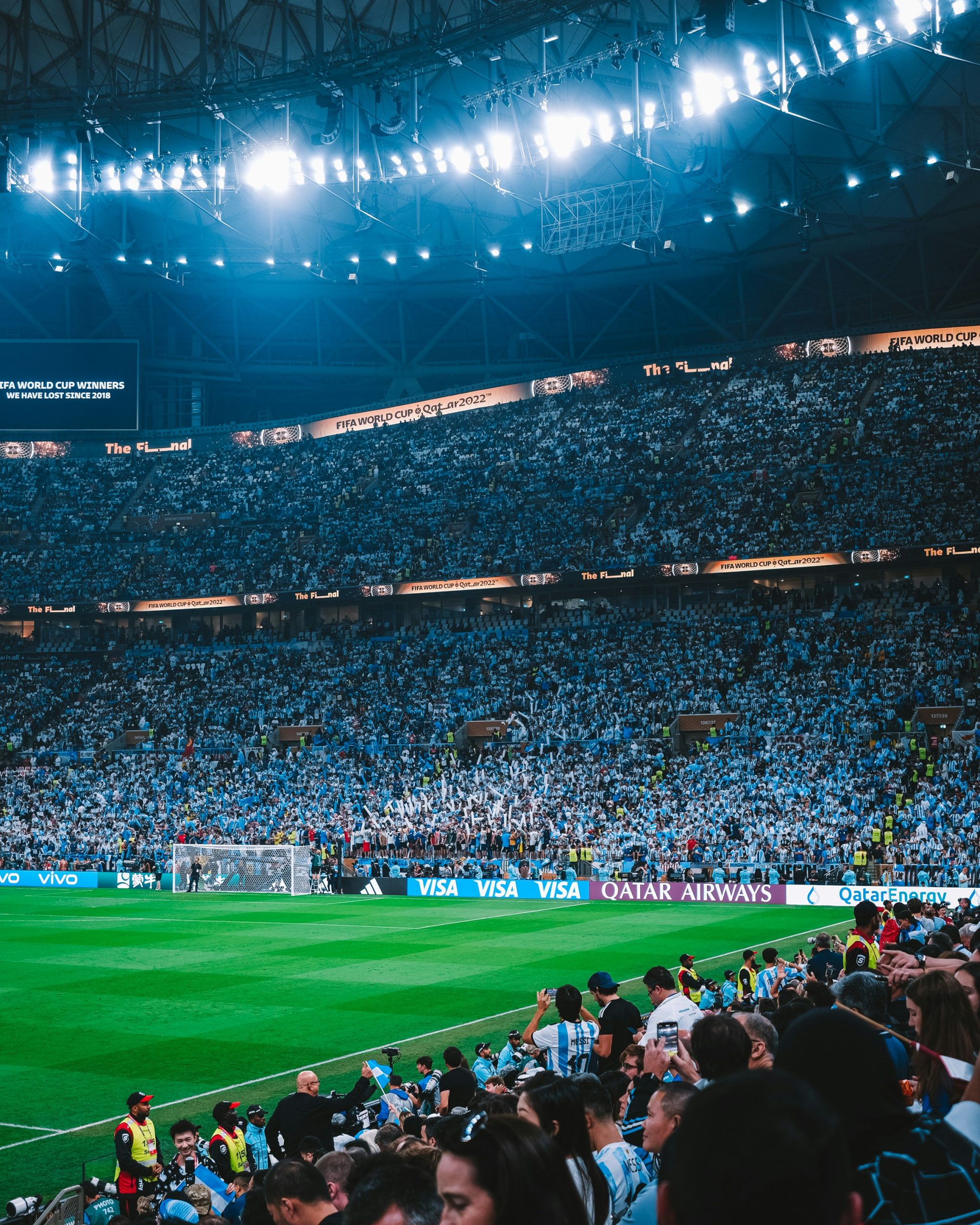
Instead, the 2026 World Cup is shaping up to be a geopolitical litmus test an event defined not by goals and glory but by damage control, security perimeters, and diplomatic tension. The stands will be full. The cameras will broadcast. But the underlying story will not be sport triumphing over politics. It will be sport struggling to survive within politics.
For the fans attending matches in Los Angeles, Mexico City, and Toronto, the experience will be one of heightened scrutiny: longer lines, heavier police presence, and an undeniable awareness that the world outside the stadium has not paused. For the Iranian players, if they ultimately take the pitch, every touch of the ball will carry political weight that no athlete should have to bear. For the European teams weighing boycotts, every public statement will be parsed for diplomatic meaning.
And for the rest of the world, watching from afar, the 2026 World Cup will offer a strange and unsettling spectacle: the world’s largest sporting event, hosted by a nation at war, competing for attention with the very conflict that surrounds it.
The doctrine of sport and politics never mixing was always more aspiration than reality. This summer, that aspiration finally dies.
Impact of the U.S.–Israel–Iran Conflict on the 2026 FIFA World Cup
GEOPOLITICAL CONTEXT AND STRUCTURAL DISRUPTION
The ongoing conflict involving the United States, Israel, and Iran represents one of the most consequential geopolitical crises of the modern era. It is disrupting global systems including energy, travel, and diplomacy.
The 2026 FIFA World Cup, hosted by the United States, Canada, and Mexico, is directly affected due to the involvement of a host nation in active conflict with a participating country (Iran). This creates uncertainty in participation, logistics, and security.
ECONOMIC, LOGISTICAL AND SECURITY IMPACT
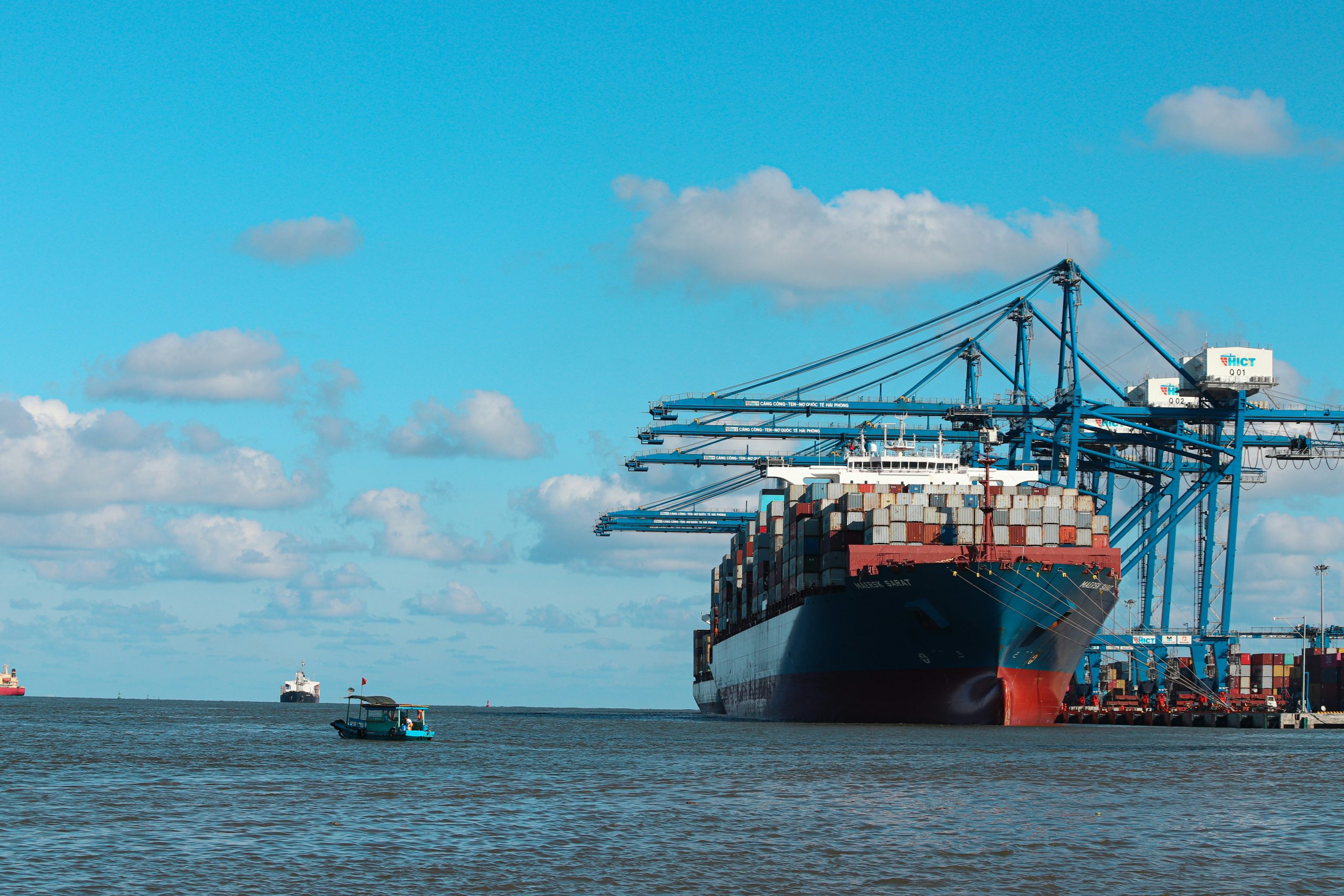
Rising oil prices are increasing travel and operational costs. Airspace restrictions are disrupting global aviation, making travel more expensive and less predictable.
Security measures are expected to intensify significantly, potentially transforming the tournament into a highly controlled environment rather than a celebratory global event.
IMPACT INDEX
Security 10/10
Global Economy 10/10
Travel 9/10
Participation 8/10
Fan Experience. 7/10
Broadcast Media 6/10
GLOBAL NEWS ANALYSIS
The conflict involving the United States, Israel, and Iran is reshaping the global landscape in ways that directly affect the World Cup.
Participation is uncertain, particularly for Iran, due to safety and political concerns. Economic pressures from rising oil prices are making travel more expensive, potentially reducing global fan turnout.
Air travel disruptions, including rerouting and delays, are affecting accessibility. Meanwhile, heightened security measures are expected to change the atmosphere of the tournament.
For decades, football has symbolized unity beyond politics. However, this World Cup is increasingly becoming a reflection of geopolitical realities.
The tournament will likely proceed, but under conditions shaped by conflict, making it one of the most politically influenced sporting events in modern history.
Summary
The ongoing military conflict between the United States, Israel, and Iran has significantly disrupted the 2026 FIFA World Cup, co-hosted by the US, Mexico, and Canada. For the first time, a host nation (the US) is directly at war with a qualified participant (Iran), breaking FIFA’s long-held principle that politics and sport remain separate.
Participation Uncertainty: Iran has issued a state directive banning travel to “hostile” countries, explicitly affecting the US. The Iranian team requested relocating its matches to neutral Mexico, but FIFA declined. This impasse could lead to Iran forfeiting its games, being replaced by another team, or shrinking its group to three teams undermining the competitive balance. Even if the ban is lifted, visa access is effectively impossible, and the team is currently training in Turkey.
Security Challenges: The US faces dual threats: potential state-backed retaliation during televised matches, and risks to Iranian players themselves. Meanwhile, Mexico contends with escalating cartel violence in Guadalajara, deploying 100,000 security personnel. Both co-hosts now confront active threats, turning the tournament into a heavily controlled security operation rather than a celebration.
Boycott Concerns: European nations, particularly Germany and the Netherlands, have debated boycotts, with a Dutch petition gathering 165,000 signatures. Although no team has officially withdrawn, public opinion is shifting, and sponsors are adjusting strategies favoring neutral “resilience” messaging over US-focused campaigns and adding force majeure clauses to media contracts.
FIFA’s Diplomatic Dilemma: FIFA President Gianni Infantino’s public thanks to President Trump for “allowing” Iran to participate backfired, as Iranian officials interpreted it as proof that Washington controls tournament access. Iran has rejected FIFA’s mediation attempts, leaving the organization trapped: excluding Iran compromises neutrality, forcing participation risks legal liability, and voluntary withdrawal creates gaps in representation.
Logistics and Broadcasting: Iraqi airspace closures are already affecting flight paths for Asian and European teams. If Iran withdraws, broadcasters could seek hundreds of millions in compensation due to lost Middle Eastern viewership.
Conclusion: While the 2026 World Cup is likely to proceed because of sunk costs, it will not be the unifying global event originally planned. Instead, it will serve as a geopolitical test, defined by stringent security, diplomatic tensions, and the intrusion of active conflict into the world’s premier football tournament. The longstanding ideal that sport and politics can remain separate will finally be challenged.